
Amphetamine workplace drug testing data collected by Fit 4 Duty conducted nationally from 2005 to 2026 has revealed a dramatic surge in amphetamine detections — the sharpest single-year increase of any substance in our dataset since records began.
Amphetamine positivity in oral fluid testing rose from 13.7% of confirmed positive results in 2024 to 28.8% in 2025 — a 110% increase in a single year. The same trend was confirmed in urine testing simultaneously, rising from 19.3% to 27.4% in the same period. When both testing matrices spike together, it confirms a genuine population-level change rather than a testing artefact.
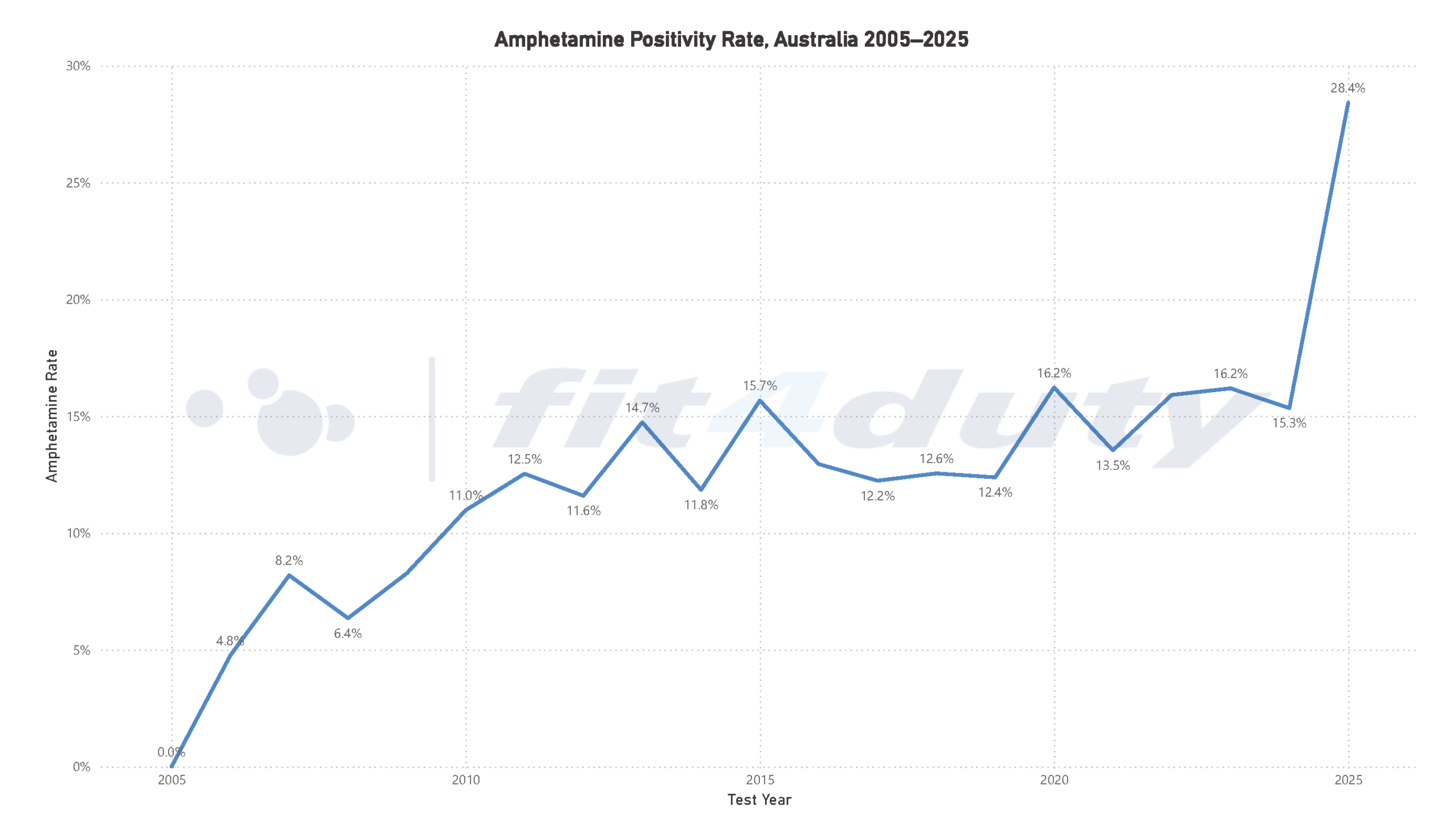
Figure 1: National amphetamine positivity rates in confirmed workplace drug tests (CWDM excluded), 2005–2025. Source: Fit 4 Duty Australian Workplace Drug & Alcohol Testing Trends Report 2026.
What does this mean for employers?
1. Check your testing panel
Some legacy drug testing panels test only for methamphetamine and do not include amphetamine as a separate analyte. Both should be included as standard — they are chemically distinct substances with different detection profiles. If you are unsure what your current panel covers, ask your testing provider.
2. Review your industry context
The surge is most pronounced in Queensland, Victoria, and South Australia, and is consistent with known patterns of stimulant use in industries including mining, construction, and transport. Employers in these sectors should consider whether their testing frequency is adequate given the current risk profile.
3. Update your staff education
Many workplace drug and alcohol awareness programs were written when cannabis was the dominant concern. The data now shows amphetamine approaching cannabis detection rates nationally. Employee education materials should reflect this shift.
Amphetamine impairs judgement, reaction time, and decision-making — particularly during the comedown phase, which can occur during working hours even when consumption happened off-duty. For safety-critical roles, this represents a significant and growing risk.
According to Fit 4 Duty’s 2026 Australian Workplace Drug & Alcohol Testing Trends Report, amphetamine positivity in oral fluid testing rose 110% year-on-year in 2025 — the largest single-year increase of any substance in the dataset since 2005.
Next steps for your organisation
For more information about workplace drug testing programs that cover amphetamine and other emerging substances, contact the Fit 4 Duty team on 1300 660 908 or get in touch online.
Data source: Fit 4 Duty Australian Workplace Drug & Alcohol Testing Trends Report 2026, based on analysis of workplace tests conducted 2005–2026. All results classified as Consistent with Declared Medications (CWDM) have been excluded from all positivity rates.