
Oral fluid vs urine drug testing has shifted dramatically in Australian workplaces over the past two decades. In 2008, less than 1% of confirmed laboratory tests processed by Fit 4 Duty used oral fluid (saliva) collection. By 2025, oral fluid accounted for 74.3% of all confirmed lab tests.
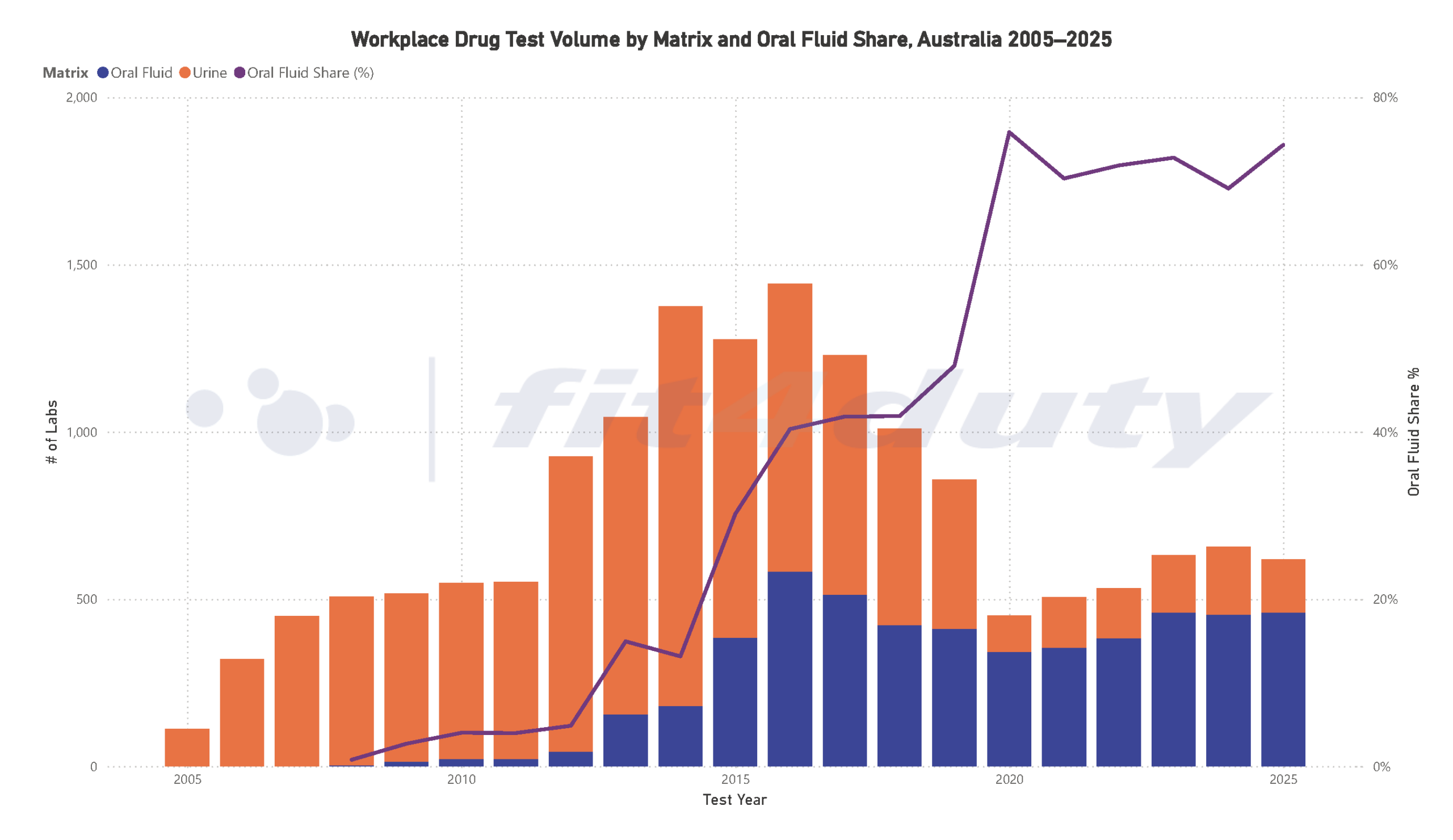
Figure 1: Oral fluid testing as a percentage of confirmed workplace lab tests, 2008–2025. Source: Fit 4 Duty 2026.
Detection windows — the key difference
| Matrix | Detection window | Best used for |
|---|---|---|
| Oral fluid (saliva) | Hours to 1–2 days | Random, for-cause, post-incident testing |
| Urine | 2–7 days (up to 30 days for cannabis) | Pre-employment, return-to-work testing |
What the positivity data shows
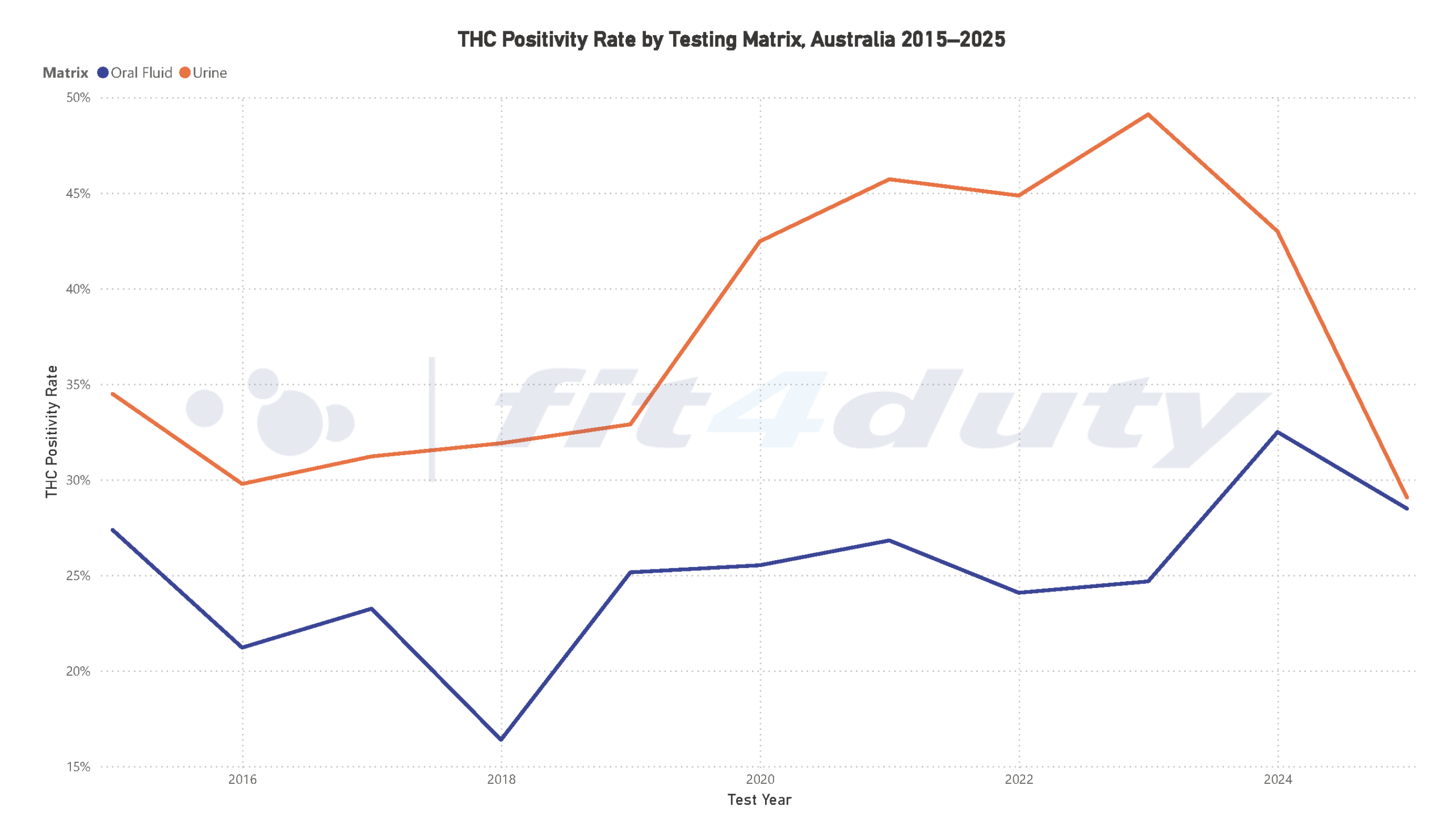
Figure 2: THC positivity rates by matrix, 2013–2025 (CWDM excluded). Source: Fit 4 Duty 2026.
Analysis of Fit 4 Duty’s confirmed laboratory results shows that THC positivity rates in oral fluid (28.5%) and urine (29.1%) have converged in 2025 — an unusual finding, as urine has historically shown substantially higher THC rates due to its longer detection window. This may reflect changes in cannabis consumption patterns or potency in the tested population.
For amphetamine, both matrices showed simultaneous surges in 2025 — oral fluid from 13.7% to 28.8%, urine from 19.3% to 27.4%. This simultaneous movement across both detection windows confirms the 2025 amphetamine surge as a genuine population-level trend.
Which matrix should your organisation use?
- Random and for-cause testing — oral fluid is appropriate and is now the industry standard. It detects recent use and is less intrusive to collect.
- Pre-employment testing — urine provides a broader detection window and is appropriate where historical exposure is relevant.
- Post-incident and return-to-work testing — consider urine where a longer detection window strengthens the evidentiary value of results.
Many organisations benefit from using both matrices in different contexts. Fit 4 Duty can advise on matrix selection as part of a broader program design. Contact us on 1300 660 908 or enquire online.
Data source: Fit 4 Duty Australian Workplace Drug & Alcohol Testing Trends Report 2026, based on workplace tests conducted across Australia 2005–2026. CWDM results excluded throughout.